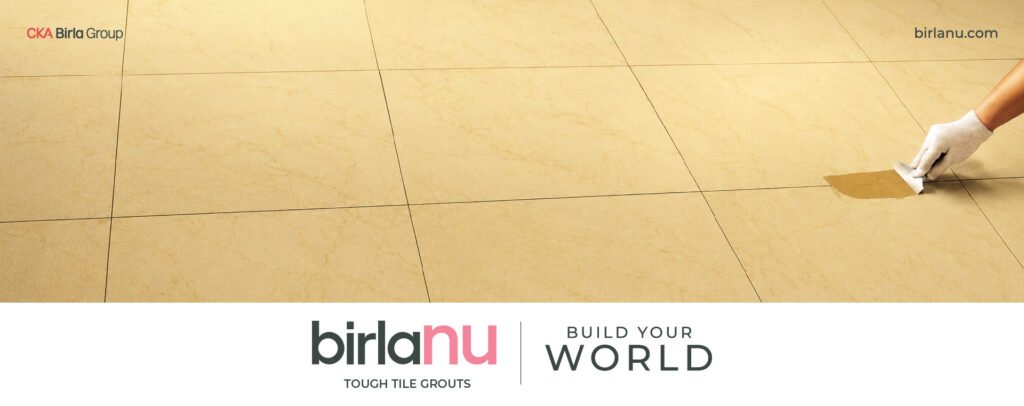
Tile finishes often get attention for their colour, size, and design, but one of the most important elements of any tiled surface is something most people barely notice – tile grout. It sits between the tiles, but its role goes far beyond filling gaps. It helps hold the surface together, prevents moisture from seeping in, and contributes to how clean and durable the finish remains over time.
In modern construction, grout is no longer treated as basic filler material. Different spaces demand different performance levels, which is why specialised formulations have become more common, including products from manufacturers like BirlaNu that focus on application-specific solutions.
Why Tile Grout Matters More Than It Seems
At a basic level, grout binds tiles together. But in practice, it also affects:
- How stable the tiled surface remains over time
- Whether water or moisture seeps into joints
- How resistant the surface is to stains and mould
- The overall visual consistency of the finish
When grout quality is poor or incorrectly chosen, issues like cracking, discolouration, and water ingress can appear much earlier than expected. This often leads to repairs that could have been avoided with better material selection at the start.
Different Types of Grout and Where They Are Used
Grout is generally available in a few key types depending on performance needs. The right choice depends on where the tiles are being installed and how much exposure the surface will face. Some of the different types of grounds that BirlaNu offers includes:
1. Cementitious Tile Grout (CTG 101 – General Use)
Cement-based grouts are the most commonly used option for standard tile installations. They are suitable for both walls and floors where conditions are relatively normal.
A product like BirlaNu Cementitious Tile Grout CTG 101 is designed for this category of use. It works well in narrow joints and offers a stable, durable finish for everyday residential and light commercial spaces.
Typical use cases include:
- Living areas
- Bedrooms
- Standard wall and floor tiling
2. Cement Grout with Admixture (Improved Performance Option)
In areas where moisture exposure is higher, cement grout alone may not be enough. In such cases, an additive or admixture is used to improve performance.
A grout admixture such as BirlaNu Tough Tile Grout Admixture helps improve flexibility and water resistance when mixed with cementitious grout. This makes it more suitable for areas where movement, humidity, or water exposure is expected.
Typical use cases include:
- Kitchens
- Bathrooms
- Semi-exposed areas
3. Epoxy Tile Grout (ETG 102 – High Performance Use)
For spaces that require high durability and resistance to staining or chemicals, epoxy-based grout is often used. It forms a non-porous surface that is stronger and more resistant compared to standard cement grout.
BirlaNu ETG 102 falls into this category and is typically used where surfaces need to handle heavy usage or strict hygiene requirements.
Typical use cases include:
- Hospitals
- Commercial kitchens
- Swimming pools
- Industrial spaces
4. Epoxy Tile Grout (ETG 103 – Hygiene-Focused Use)
Another variation of epoxy grout is designed specifically for hygiene-sensitive environments. Along with strength, it offers resistance to bacteria and fungal growth.
BirlaNu ETG 103 is suited for such conditions, making it useful in areas where cleanliness and maintenance are critical over long periods.
Typical use cases include:
- Healthcare facilities
- Food preparation areas
- High-traffic commercial washrooms
Maintenance and Long-Term Performance
Grout helps protect tile joints, but it needs the right care to maintain its appearance and strength over time.
- Cement-based grout may require periodic sealing to prevent moisture absorption and staining.
- Regular cleaning helps prevent dirt, mould, and discolouration, especially in wet areas like bathrooms and kitchens.
- Harsh or acidic cleaners should be avoided as they can damage the grout surface over time.
- Epoxy grout generally needs less maintenance due to its resistance to water, stains, and chemicals.
- Promptly cleaning spills help prevent long-term staining in all types of grouts.
Additionally, the long-term performance also improves significantly with correct installation and appropriate product selection for the space.
How to Choose the Right Grout for Your Space
Understanding what factors matter before selecting a grout type
Choosing grout is not just about colour or cost, it directly affects durability, hygiene, and long-term performance. The right choice depends on where and how the tiles will be used.
- Moisture exposure: Bathrooms, kitchens, and outdoor areas need higher water resistance compared to living rooms or bedrooms.
- Usage intensity: High-traffic spaces like corridors or commercial areas require stronger, more durable grout options.
- Hygiene needs: Spaces such as hospitals, kitchens, and washrooms benefit from grout that resists bacteria and staining.
- Joint width: Narrow joints often work well with cementitious grout, while wider joints may need more flexible or epoxy-based options.
- Maintenance expectations: If low maintenance is a priority, epoxy-based grouts are generally more suitable.
Selecting the right grout at the planning stage helps avoid early damage, frequent repairs, and uneven surface ageing.
Common Grout Problems and How to Avoid Them
Key issues that affect tiled surfaces and how to prevent them early
Even high-quality tiles can fail visually or functionally if grout is not chosen or applied correctly. Most common issues can be avoided with the right approach.
- Cracking: Often caused by incorrect mixing, movement in the base surface, or using the wrong grout type for the area.
- Discolouration: Happens due to moisture absorption, dirt buildup, or use of harsh cleaning agents.
- Mould and mildew growth: Common in damp areas when grout is not water-resistant or properly maintained.
- Staining: Typically occurs in porous cement-based grout when spills are not cleaned quickly.
- Weak bonding or joint failure: Usually linked to improper installation or poor surface preparation.
Most of these issues can be prevented by correct product selection, proper application techniques, and regular but gentle maintenance practices.
Conclusion
Tile grout is often overlooked, but it is a key part of any tiling system. It affects durability, hygiene, moisture resistance, and even the overall appearance of a space. With growing expectations from modern interiors and infrastructure, grout selection has become more specific and performance-driven.
Materials like those offered by manufacturers such as BirlaNu reflect this shift—covering everything from basic cementitious options to advanced epoxy systems—helping ensure that tiled surfaces remain strong, clean, and visually consistent over time.