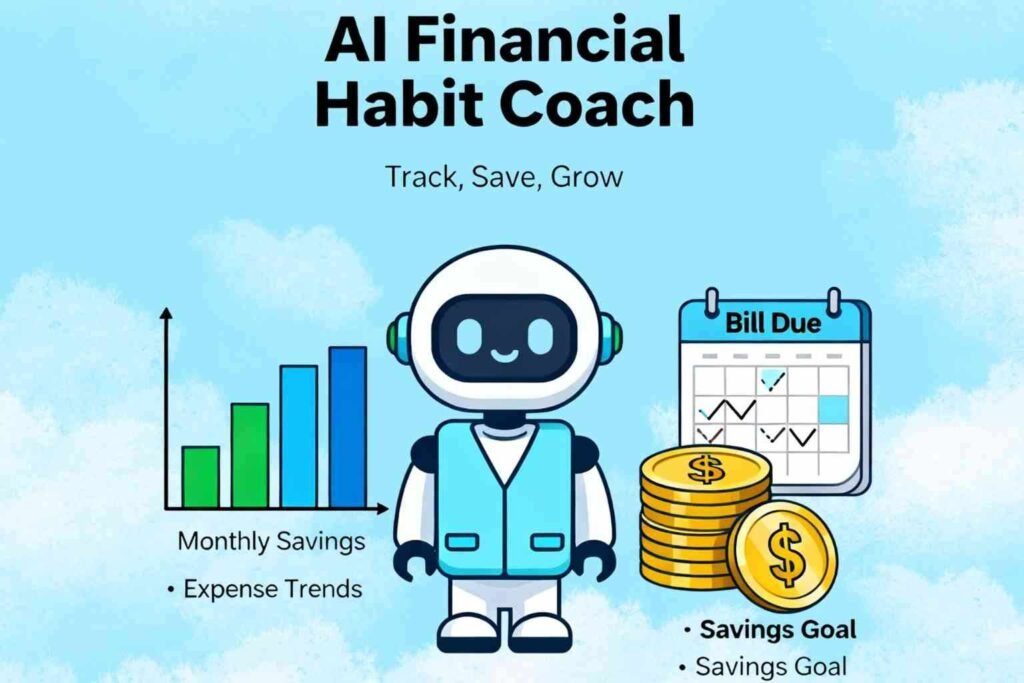
Money management isn’t strictly a numbers game. It is about habits. (Mastering the save-spend-divest trifecta is something a lot of us know we should be doing but have trouble staying on top of.) This is where AI financial habit coaching can be a game changer. No longer are AI tools just passively monitoring transactions but actively nudging people to better financial habits via personalized feedback in real time.
AI financial habit coaching uses artificial intelligence and insights from behavioral science to teach people how to form stronger money habits. It’s on its way to becoming one of the most popular concepts in personal finances.
1. What is AI Financial Habit Coaching?
AI financial habit coaching refers to the use of digital platforms or apps which uses artificial intelligence for tracking spending habits and providing tailor-made financial advices. They do more than simply display reports, unlike traditional budgeting apps. They actively direct the users by giving them encouraging habits to adopt and reminding them of why they want to achieve these new habits.
If a person spends too much on dining out, for instance, the A.I. system can send alerts or suggest substitutes or set weekly spending limits.
2. By Financial Habits Are Worth More Than Income
A lot of people think more money equals financial security. But it is possible to earn a lot and still have bad spending habits. Budgeting, saving money on a regular basis, and avoiding incurring debt are the real keys to stability.
A.I. coaching zeros in on behavior change, not just following the money. This method is about long range change, not quick fixes.
3. How AI Understands Spending Patterns
Systems using AI scrutinize your transaction history, classify expenses and identify patterns. They get better over time, learning how users behave to make suggestions more precise. This is the mechanism that enables AI to keep getting smarter with use.
Some of the things AI tools tell us are:
- Identifying unnecessary subscriptions
- Detecting rising monthly expenses
- Suggesting savings opportunities
- Recommending realistic budgets
- Highlighting impulse spending patterns
These are enlightenments that let you see your financial habits in a light way.
4. Customized And Individualized Coaching Counts For A Lot
Conventional financial advice tends to one-size-fits all. AI coaching, on the other hand, is individualized. It takes into account income, lifestyle, goals and past behavior. This tailored focus make the advice more applicable and thus easier to follow.
People are more likely to act on advice they receive when it corresponds to their actual situation.
5. Quick Feedback Promotes Good Decisions
One of the most powerful features of AI financial coaching is immediate feedback. Rather than reviewing expenses at the end of the month, users get alerts when they spend.
If, say, someone overspends entertainment budget, the app can alert them immediately. This immediate visibility prevents overspending and fosters discipline.
6. Building Long Term Financial Discipline
AI coaching focuses on consistency. Simple way to show up and do a little, regularly Biggest bang for your buck is taking 2 minutes each day. The system may prompt the users to:
- Automate savings with a designated portion of your income
- Cut one frivolous expense per month
- Set short term financial goals
- Review spending weekly
- Increase savings gradually over time
These graduation steps keep financial progress achievable and practical.
7. AI and Behavioral Psychology
Financial habit coaching powered by AI frequently leverages principles of behavioral psychology. For instance, it might employ positive reinforcement when users complete goals. It may also leverage cues as well as progress monitoring to maintain client motivation.
Game elements like achievement badges and milestone celebrations help make saving money feel rewarding rather than limiting.
8. Benefits for Young Professionals
AI financial coaching can be particularly helpful for young professionals. A lot of them are supporting themselves for the first time and could be inexperienced at planning their finances. AI tools offer basic advice without the high cost of financial advisors.
They are mobile optimised, user friendly and accessible 24/7 so they fit in with a busy life.
9. Challenges and Concerns
Challenges Despite its fast growth, there are some concerns with AI financial coaching:
- Data privacy and security risks
- Over dependence on automated advice
- Limited comprehension due to complex financial conditions
- Potential algorithm bias
- 77 Trust As such, these issues must be addressed if we want develop trust in AI driven financial system
10. The Future of AI Powered Financial Coaching
The future looks promising. And then we’ve been moving towards AI systems that give us a deep look into insights and predictive analysis. In the not too distant future, AI could forecast impending cash flow problems and recommend preventative measures ahead of time.
As technology continues to advance, it is reasonable that AI financial habit coaching will become more common in personal money management.
Key Takeaways
- Financial habit coaching powered by A.I. primarily aims to change behavior, not just track money
- Customized recommendations makes financial advice that much more feasible
- Reduced overspending thanks to real-time alerts
- Small sacrifices equate to financial security
- And data protection and responsible use is crucial for trust
FAQs:
Q1. What is AI Financial Habit Coaching?
It’s using AI to help steer and improve one’s personal financial behavior.
Q2. How is it different from apps that incorporate budgeting?
Rather, it offers personalized coaching and real-time feedback instead of simply tracking expenses.
Q3. Is AI financial coaching safe?
The majority of platforms rely on secure systems, but users should select trusted apps and read the privacy policies.
Q4. Can AI replace financial advisors?
It may be helpful for simple financial planning, though complicated decisions can still benefit from expert advice.
Q5. Who stands to gain the most from AI financial coaching?
It can be very useful for young professionals, small business owners, and those who want to work on better money habits.